









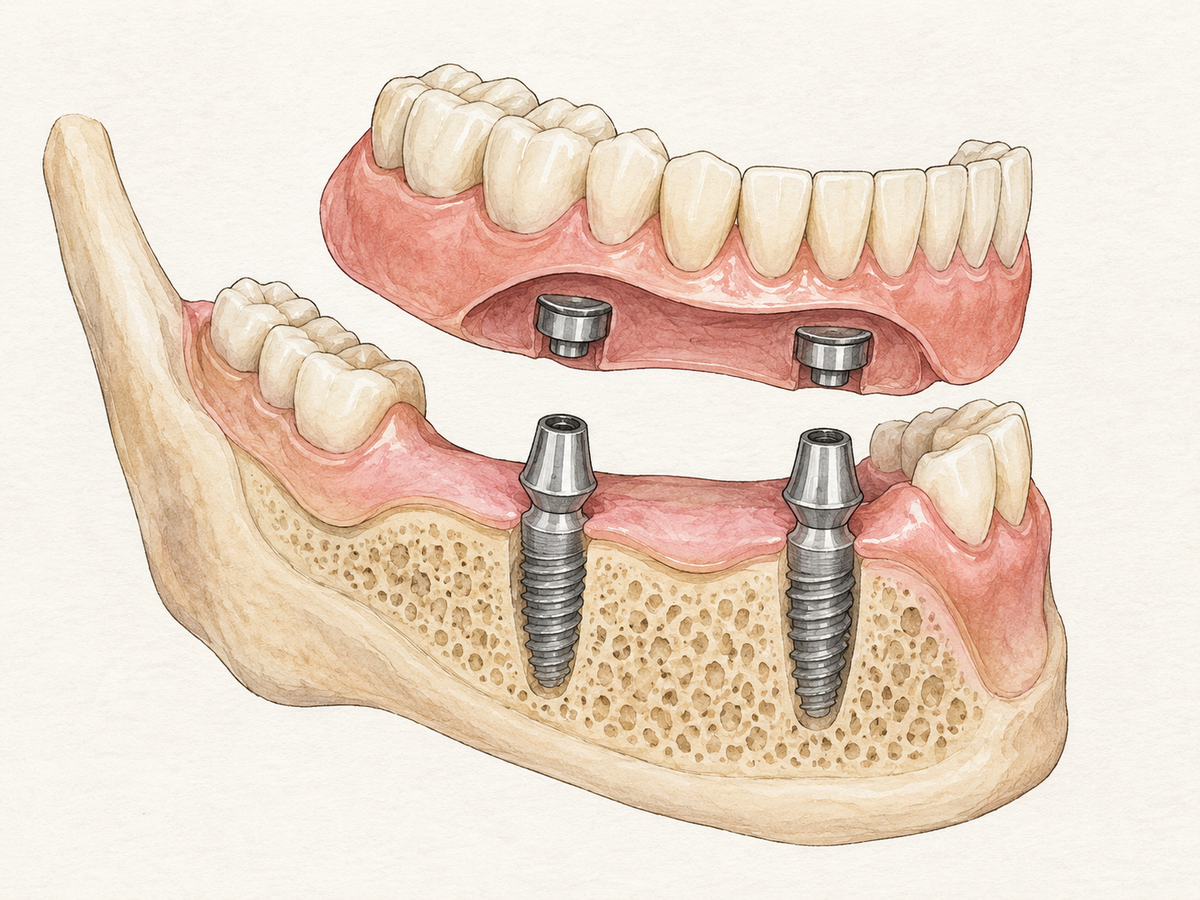
Snap-on dentures are removable dentures that clip onto 2–4 dental implants, which are metal posts placed in the jawbone. They are much more stable than traditional dentures and usually cost less upfront than fixed implant teeth, but they require daily cleaning, regular maintenance, and a realistic budget for long-term repairs. They are a middle-ground option, not a maintenance-free one.
Before comparing advertised prices, ask each dental office for a written estimate that includes extractions, implants, attachments, temporary dentures, and follow-up visits.
What Are Snap-On Dentures?
Snap-on dentures are a type of implant-supported removable denture. The implants are metal posts placed in the jawbone. The denture has clips or attachments that snap onto those implants.
Unlike fixed implant teeth, you can take a snap-on denture out each day. This makes cleaning easier, but it also means the denture is not permanently locked in place. It does not rely on natural tooth roots for support.
The Big Pro: Stability and Confidence
Traditional dentures, especially lower ones, can slip, click, or feel loose. Snap-on dentures grip the implants, so they stay put much better.
Reviews comparing implant-retained dentures with regular complete dentures found better comfort, stability, speech, and chewing ability with the implant-supported option, according to a systematic review of studies on this topic. Another meta-analysis found better general satisfaction and oral health-related quality of life with implant-retained lower dentures.
That stability affects daily life in practical ways:
- Less worry about denture movement while eating in public.
- Clearer speech without the denture shifting.
- Less need for denture glue or adhesive.
- More confidence when smiling or talking up close with others.
The emotional relief matters just as much as the mechanics. Many people feel less self-conscious when their denture feels secure.
Pro: Lower Upfront Cost Than Fixed Implants
A full-arch fixed implant bridge is a permanent set of teeth that stays in the mouth and is usually removed only by a dentist. Snap-on dentures typically require fewer implants and less surgery than that kind of fixed restoration.
That often translates into a lower starting price. People who want implant stability but do not want a permanent prosthesis may see snap-on dentures as a reasonable in-between choice.
Dental insurance may cover some parts of treatment, such as the denture itself or extractions. Coverage varies widely, so do not assume insurance will handle most of the bill.
Con: Total Cost and Ongoing Expenses
The advertised price is rarely the full price. A written estimate should account for common add-ons that many quotes exclude:
- Tooth extractions
- Bone grafting, if the jaw needs more support
- X-rays or 3D scans
- Abutments, which connect the implants to the denture
- Temporary dentures while healing occurs
- Follow-up visits
Then there are recurring costs. Over time, you may need:
- Replacement clips, O-rings, or other attachment parts
- Denture relines or repairs
- Implant maintenance and checkups
These costs can add up. One study of a common attachment system found that average maintenance costs over about five years were nearly equal to the original treatment cost, according to a retrospective study. A separate seven-year study found lower average maintenance costs, around 19 percent of the initial price, but there was a wide range and some patients needed much more expensive repairs.
The takeaway: compare full written estimates, not headline prices.
Con: Comfort, Chewing, and Daily Care
Snap-on dentures are not a set-it-and-forget-it solution. Some people notice:
- Sore spots where the denture presses on the gums.
- A bulky or awkward feeling in the mouth.
- A short learning curve for speaking clearly.
Chewing does improve compared with regular dentures. One research review noted that bite force with implant-retained dentures could be more than twice as high as with regular dentures. Still, chewing power is usually less than with natural teeth or fixed implant teeth.
Daily care is also more involved. You must remove and clean the denture each day. The implants themselves still need careful brushing. Skipping this can lead to sore gums, infection, or bone loss around the implants.
Risks and Candidacy
Implant failure means an implant does not stay stable or does not heal properly into the jawbone. Poor daily cleaning or skipped maintenance visits can raise the risk of infection and bone loss around the implants, which can lead to failure.
Some factors affect whether implants are likely to succeed:
- Bone volume: There must be enough jawbone to hold the implants.
- Gum health: Ongoing gum disease can make healing harder.
- Smoking: Smoking is strongly linked to a higher risk of implant failure, according to a meta-analysis on implant risk factors.
- Diabetes: Poorly controlled diabetes can slow healing and raise infection risk, according to clinical guidance on dental implants.
- Certain medications: The dentist needs a full medical history before planning surgery.
A dentist must assess candidacy with X-rays or scans. Not everyone qualifies.
See a dentist if you notice pain, swelling, bleeding, a feeling that an implant is loose, or a denture that suddenly no longer fits well.
Snap-On vs. Traditional Dentures
| Feature | Traditional dentures | Snap-on dentures |
|---|---|---|
| Retention | May move, especially lower dentures | Clips onto implants and stays much more stable |
| Adhesive use | Often needed | Often little or none needed |
| Bone preservation | Less direct jawbone stimulation | Implants may help preserve jawbone |
| Upfront cost | Lower | Higher because of surgery and implants |
| Ongoing care | Relines and denture replacement | Denture care plus implant maintenance and attachment replacement |
Reviews consistently favor snap-on dentures for retention, comfort, speech, and chewing ability, according to this systematic review and this review of patient outcomes.
Snap-On vs. Fixed Implant Dentures
| Feature | Snap-on dentures | Fixed implant bridge |
|---|---|---|
| Removability | You take it out daily | Stays in the mouth; dentist removes it |
| Chewing power | Better than regular dentures, but usually less than fixed teeth | Closer to natural teeth |
| Cleaning access | Easier because you can remove it and clean around the implants | Often harder to clean underneath |
| Number of implants | Usually fewer | Usually more |
| Surgery | Often less extensive | Often more extensive |
| Total cost | Lower upfront, but ongoing attachment maintenance | Higher upfront |
Fixed implant bridges can feel more like natural teeth, but they are generally more expensive and more difficult to clean. Snap-on dentures trade some chewing power and that permanent feel for easier cleaning access and a lower initial cost.
Who Gets the Best Results
You are more likely to do well with snap-on dentures if you:
- Have enough jawbone or are willing to have bone grafting if needed.
- Have healthy gums and good daily mouth care habits.
- Are willing to attend maintenance visits.
- Have a realistic budget for long-term repairs and replacement parts.
- Do not smoke, or are willing to quit.
Higher-risk situations include:
- Heavy smoking.
- Poorly controlled diabetes or other conditions that slow healing.
- Inability or unwillingness to clean the implants daily.
- Skipping follow-up appointments.
Smoking is one of the most consistent risk factors for implant failure, according to research on patient-related risk factors. This does not mean every smoker will have a problem, but it does raise the chance of complications.
Questions to Ask Before You Commit
Before deciding, ask the dental office:
- What implant brand or system do you use, and why?
- How many implants are planned for my jaw?
- Does the written estimate include extractions, bone grafting, imaging, abutments, a temporary denture, and follow-up visits?
- What are the warranty terms and repair fees?
- How often will clips or O-rings need replacement, and what does that cost?
- Do I need sedation, and is it included in the quote?
- What is the follow-up schedule after the denture is placed?
- How many snap-on denture cases do you handle each year?
Get at least two written estimates. Compare them line by line. Then schedule a consultation, but do not feel pressured to decide the same day. A good treatment plan should feel clear, not rushed.
This article has been reviewed by an oral health professional for accuracy. It is intended to provide general educational information and should not be used as a substitute for personalized medical advice, diagnosis, or treatment. If you have questions or concerns about your oral health, please consult a dentist, physician, or other qualified healthcare provider.