





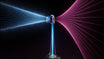



How flow-path design, precision manufacturing and everyday use shaped the development of AirJet™ 2.0.
RANVOO developed AirJet around a familiar routine: brushing with toothpaste, morning and evening. The engineering challenge was to improve cleaning between teeth by using airflow to move the toothpaste foam and fluid already in the mouth, without adding a separate water tank.
Speaking with Ray for this edition of Behind the Design, RANVOO product manager Ford describes a development process shaped by that goal.
“We aimed to improve cleaning between teeth within the brushing habits people already have,” Ford explains.
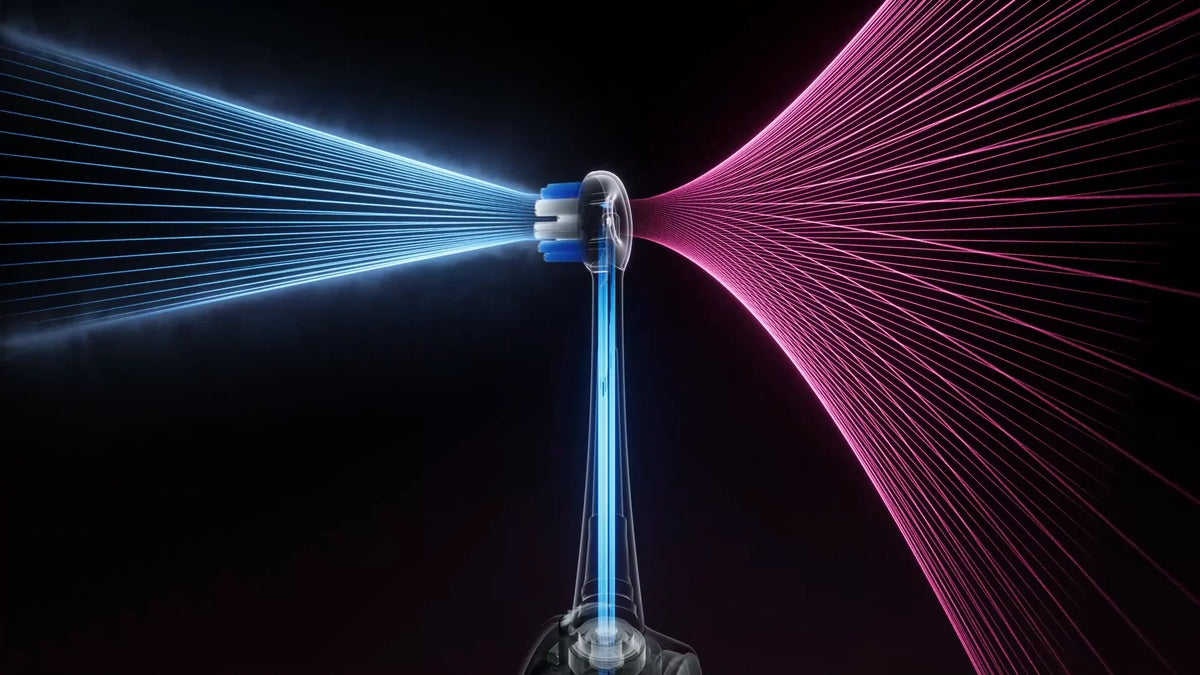
Bringing that idea into a toothbrush required an airflow engine, a specially designed brush head and airflow control algorithms to work together. As the technology evolved, the team focused on how effectively the airflow could be used inside the brush head.
Bringing the Flow Paths Together
The first generation established the jet-assisted cleaning system using available pump structures and manufacturing methods. Those methods also placed limits on the geometry inside the brush head.
In the original design, the primary jet and secondary flow path were offset by approximately four millimetres. That separation limited how effectively the driving airflow could draw the surrounding fluid along with it.
For the second generation, the team brought the passages onto a common axis and added a jet-cap structure. The revised geometry supported the entrainment effect—the process by which a moving jet draws surrounding fluid into its flow.

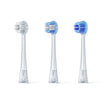
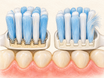
AirJet™ 1.0 and AirJet™ 2.0 brush-head concepts, showing the change from offset to coaxial flow paths.
Finding the right arrangement required experimentation. An early approach placed the driving airflow around the outside, with the secondary flow in the centre. However, the compact toothbrush pump could not supply the volume of air that arrangement required.
The team reversed the positions, moving the primary jet to the centre. This allowed the design to work within the pump’s capabilities and made a small, precisely formed opening central to the brush head’s operation.
Making Precision Possible
Producing that opening consistently became the next challenge.
At approximately 0.3 millimetres across, the jet opening could not be formed using the conventional injection-moulding process available to the team. CNC drilling presented difficulties with accuracy, processing speed and residual material that could obstruct the passage.
Initial laser-drilling trials introduced another problem: the beam could penetrate beyond the intended opening.
The team adopted a fixed-focus laser process, achieving machining precision of 0.01 millimetres while avoiding residue that could block the hole. The manufacturing process made it possible to produce the small opening required by the revised flow geometry.

A close-up of the jet opening and a conceptual illustration of focused laser drilling.
Designed for Actual Brushing
The brush head also had to work in the positions it would encounter inside the mouth.
During development, the team found that contact between the back of the head and the inner cheek could obstruct the intake, interfering with the airflow amplification effect.
The solution was to position the additional intake paths on the same side as the outlet, facing the bristles. This kept them away from the rear contact surface, allowing intake when the back of the brush head was covered.
The adjustment addressed a practical detail of brushing that the flow geometry alone could not resolve.

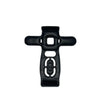
The revised brush head positions additional intake paths on the bristle-facing side, allowing intake when the rear surface is obstructed.
Putting Performance to the Test
The changes to flow geometry, manufacturing and intake placement addressed specific challenges in making AirJet work during brushing. Product testing provided a way to evaluate the complete toothbrush’s cleaning performance.
In human dental plaque-removal testing, the tested AirJet toothbrush achieved a Grade 1 rating for plaque removal and demonstrated a 47% improvement in plaque-removal performance compared with the sonic electric toothbrush used for comparison.*
For RANVOO, measurable cleaning performance gives the development process its direction. The evolution of AirJet brings together fluid-flow engineering, precision manufacturing and attention to everyday use, with each refinement contributing to the design of the complete brushing system.
Discover AirJet 2.0
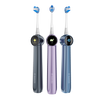
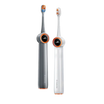
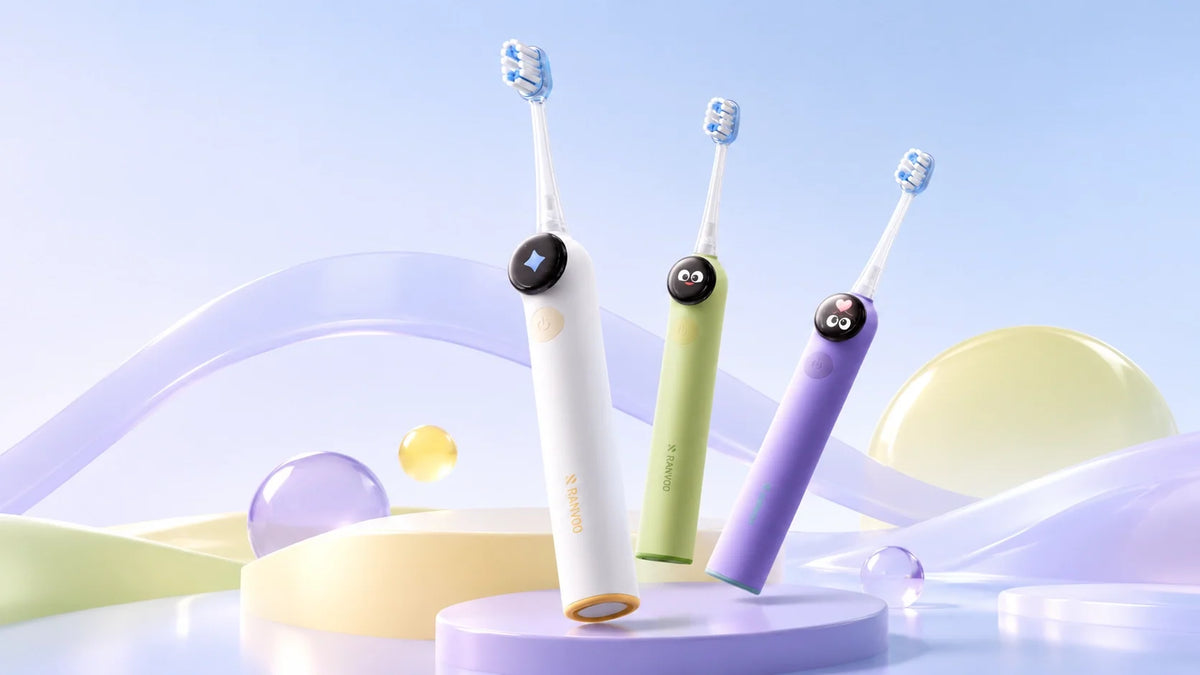
AirJet™ 2.0 is featured in the RANVOO AirJet X5 and AirJet X3A Elite.
The AirJet X5 combines the technology with a colour display and magnetic wall-mounted wireless charging. The AirJet X3A Elite pairs it with the animated Bubbo character and USB-C charging.
Based on Ray’s interview with RANVOO product manager Ford. Quoted remarks have been translated from Chinese and edited for clarity.
Performance results apply to the tested samples under the specified test conditions.

Leave a comment
All comments are moderated before being published.
This site is protected by hCaptcha and the hCaptcha Privacy Policy and Terms of Service apply.