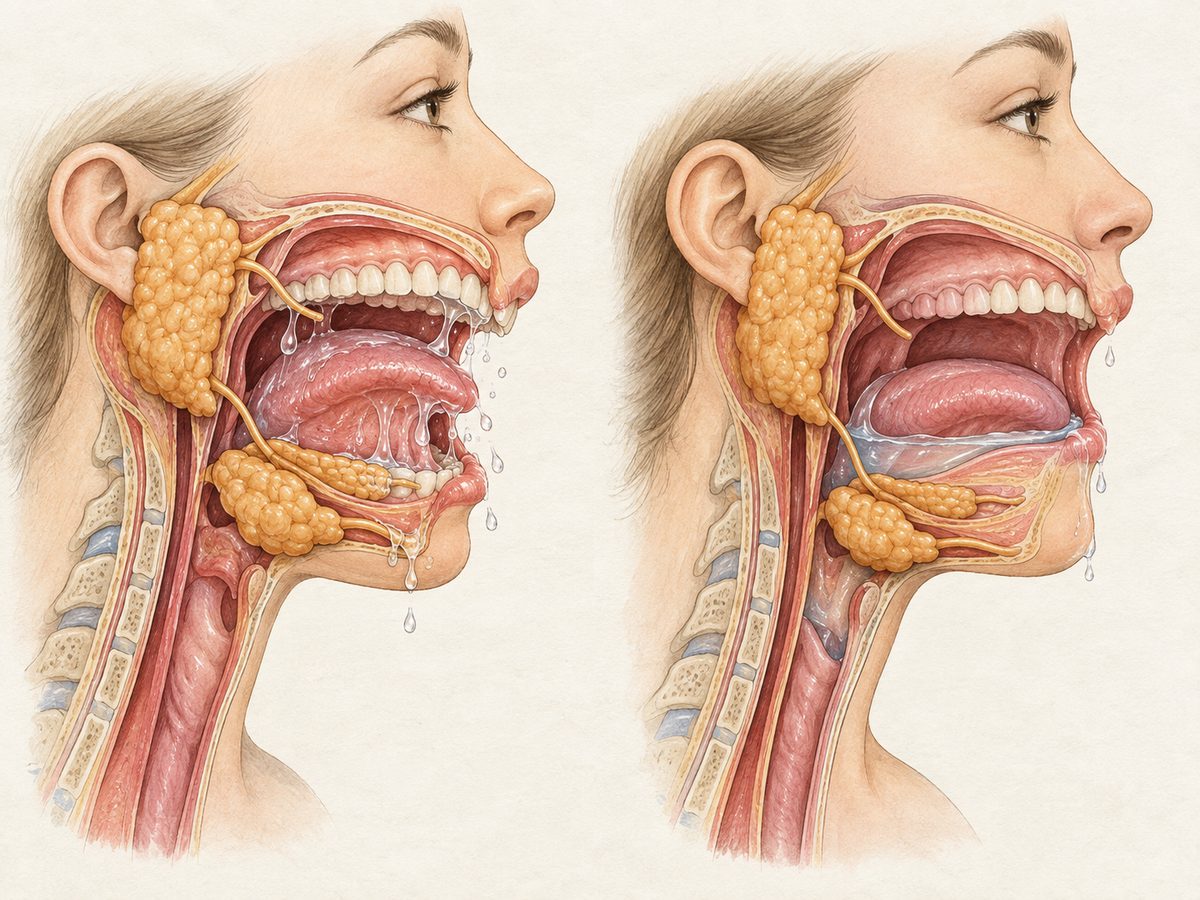
Excessive saliva usually comes down to two things: your salivary glands (spit glands) are making too much saliva, or your swallowing is not clearing it normally, so it collects and may drool. If your mouth fills quickly with watery spit, especially around food or strong tastes, that leans toward a production issue. If you feel like you cannot keep up with swallowing, or you drool at night, a swallowing issue may be the main problem. Sudden drooling with weakness, slurred speech, or trouble breathing needs emergency care.
Before assuming a long-term problem, rule out short-term triggers and note when the symptom happens. Sudden drooling with weakness, slurred speech, or breathing trouble is an emergency.
Why It Happens: Production vs. Swallowing
Your mouth makes saliva all day. It helps you chew, swallow, speak, and protect your teeth. Usually, you swallow it automatically without thinking about it.
Sialorrhea is the medical term for excessive saliva or drooling. It can happen when:
- The spit glands produce more saliva than usual.
- Swallowing is weaker or less frequent, so saliva pools in the mouth.
- Both problems happen at the same time.
A simple way to tell the patterns apart is to notice what the symptom feels like:
- More spit than usual: Your mouth fills quickly, especially with sour, spicy, or strongly flavored foods.
- Trouble clearing spit: Saliva seems to collect, you need to swallow often, or you drool at night.
- Both: You notice extra fluid and also feel like swallowing takes effort.
Difficulty swallowing is called dysphagia. In many ongoing cases, especially with brain and nerve conditions, the spit glands are not making too much saliva. Instead, the muscles and nerves that clear saliva are not working as smoothly as they should. This can cause saliva pooling and drooling even when production is normal, according to clinical guidance on sialorrhea. Research in children with cerebral palsy also found that drooling often comes from oral motor control problems rather than extra saliva production (Drooling in cerebral palsy).
Temporary Causes to Rule Out First
Sometimes excessive saliva is a short-term visitor, not a long-term problem. Common temporary triggers include:
- Pregnancy: Hormonal changes and nausea can bring on extra saliva, usually early in pregnancy. It often improves later in pregnancy (Ptyalism gravidarum).
- Acid reflux: Stomach acid washing up toward the throat can trigger the mouth to make more saliva.
- Teething in babies: Drooling is normal when baby teeth are coming in.
- Recent dental work: Your mouth and jaw may temporarily feel different or make more saliva after a procedure.
- Spicy or sour foods: These can directly stimulate the spit glands.
- Nausea: Queasiness can make the mouth water before vomiting.
A helpful step is to track timing and duration. Write down when the symptom started, how long it lasts, and whether it comes and goes. This can separate a passing irritation from something that keeps returning.
Persistent Causes Doctors Look For
If the problem lasts for weeks or keeps coming back, a clinician may look for ongoing causes. These can include:
- GERD, or chronic acid reflux, which can irritate the throat and trigger extra saliva.
- Parkinson’s disease: Drooling is common, but it often comes from reduced swallowing and less facial muscle movement rather than more spit production (Salivation in Parkinson’s disease).
- Stroke: A stroke can affect the nerves and muscles that control swallowing.
- Mouth infections: Irritation inside the mouth can increase saliva.
- Tonsil problems: Swollen or irritated tonsils can make the throat feel blocked and affect swallowing.
- Sleep apnea: Nighttime breathing problems may play a role in some people, including people with Parkinson’s disease (Sleep apnea and sialorrhea).
Ongoing drooling often points to swallowing dysfunction rather than true overproduction. That is why the symptom pattern matters.
Medications That Can Be the Trigger
Some medicines can increase saliva or make swallowing harder. This cause is easy to overlook. Medicines that may be involved include:
- Antipsychotics, especially clozapine, which is a known trigger for excess saliva (Drug-induced sialorrhea).
- Seizure medicines, some of which can worsen swallowing problems (Dysphagia in epilepsy patients).
- Alzheimer’s medicines, particularly cholinesterase inhibitors, which can cause excess saliva as a side effect (Drug therapy and oral health).
- Vitamins, herbs, and supplements: Include these when you review your full medication list, because they can sometimes affect saliva or interact with medicines.
Do not stop or change a prescription on your own. That can cause more serious problems. Instead, bring a complete medication list, including doses and over-the-counter products, to your appointment.
At-Home Management That Works
These strategies can make daily life more comfortable. They manage symptoms, but they do not cure the underlying cause.
| Time | Helpful strategy |
|---|---|
| Daytime | Take small sips of water, chew sugar-free gum, use swallow reminders, and keep tissues or a cloth nearby. |
| Nighttime | Sleep on your side, clear saliva before bed, and use an absorbent towel or pillow cover if needed. |
Swallow reminders can help because some people simply swallow less often without noticing. A phone reminder or a small note can prompt you to swallow more regularly. For children with neurological conditions, reminders to swallow may be helpful (Pediatric sialorrhea).
Comfort and dignity matter. If you care for a child or adult, use calm, matter-of-fact language and keep absorbent products within reach.
Medical Treatments for Severe Cases
When drooling is heavy, frequent, or affecting quality of life, a specialist may recommend treatment. Options usually move from simpler to more involved steps.
- Anticholinergic medications: These medicines reduce saliva, but they can cause dry mouth, constipation, blurred vision, or confusion, especially in older adults (Management of oral secretions).
- Botox injections into the spit glands: Botox can temporarily reduce saliva production. Injections are usually repeated every few months and may be effective with fewer body-wide side effects than oral medicines (Botulinum toxins for sialorrhea).
- Radiation to the salivary glands: This is used less often and can cause dry mouth.
- Surgery: This is typically reserved for severe cases that do not respond to other treatments (The burden of sialorrhoea).
The right choice depends on the cause, the person’s overall health, and how much the symptom affects daily life.
Red Flags: When Drooling Signals Danger
Some situations need emergency medical care, not home remedies. Call emergency services if drooling appears suddenly along with any of these:
- Weakness in the face, arm, or leg, especially on one side
- Slurred speech or trouble finding words
- Trouble breathing or shortness of breath
- High fever with a stiff neck or confusion
- New difficulty swallowing with coughing or choking
These can signal a stroke, a serious infection, or an airway problem. Do not wait to see if it passes.
Next Steps With Your Doctor
Before an appointment, keep a simple symptom diary. Record:
- When drooling happens: day, night, or both
- How often it happens
- What you were doing or eating at the time
- What makes it better or worse
- All medicines and supplements, with doses
- Any swallowing trouble, coughing, choking, heartburn, tremor, stiffness, snoring, or fever
Questions you may want to ask:
- Could this be a medication side effect?
- What is the most likely cause?
- Should I see a swallowing specialist, dentist, ear-nose-throat doctor, or neurologist?
- What can I safely do at home while we investigate?
Management often combines treating the underlying cause with controlling the symptom itself. A team approach can help, especially when swallowing or neurological conditions are involved (Sialorrhea management). The goal is not just to live with excessive saliva, but to find out why it is happening and what can safely help.
This article has been reviewed by an oral health professional for accuracy. It is intended to provide general educational information and should not be used as a substitute for personalized medical advice, diagnosis, or treatment. If you have questions or concerns about your oral health, please consult a dentist, physician, or other qualified healthcare provider.