













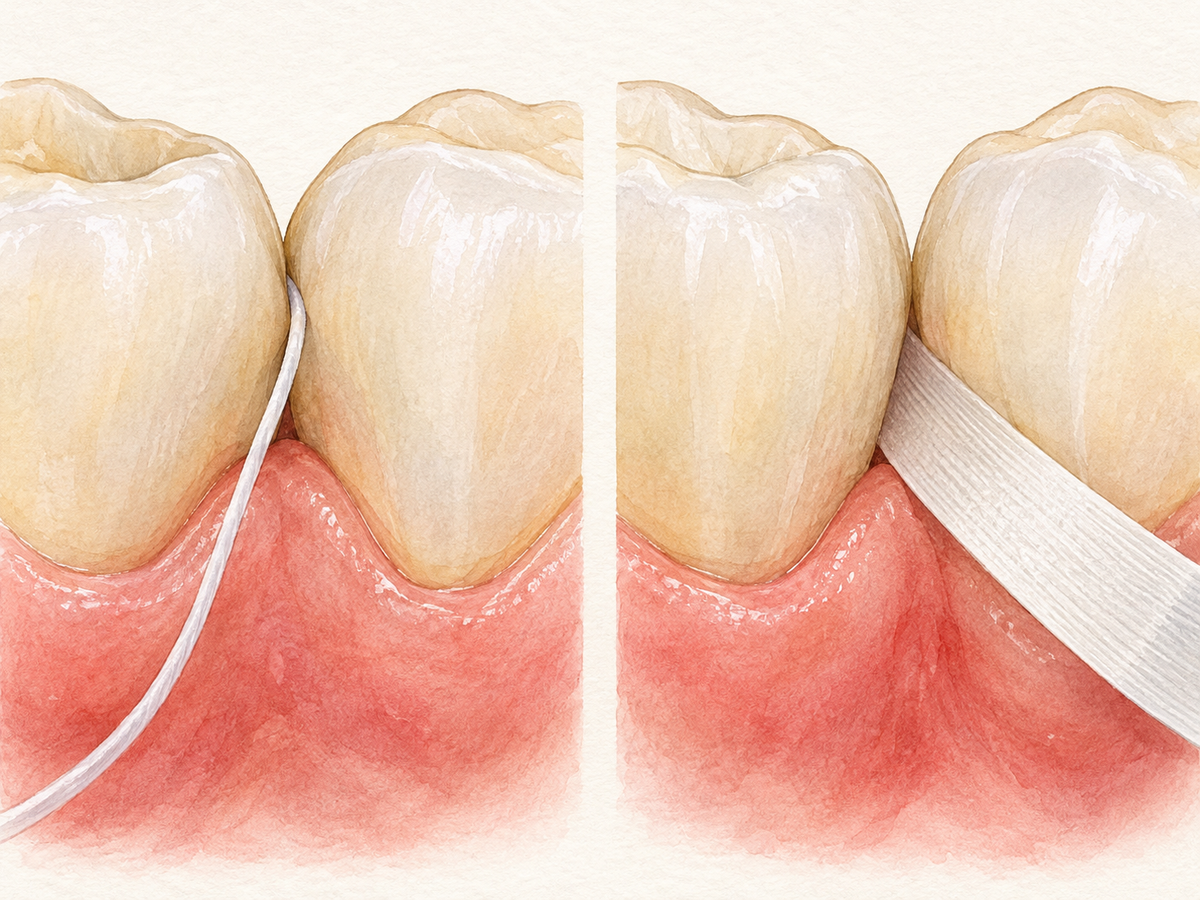
There is no single best choice for everyone. If your teeth touch tightly, regular floss often slides in more easily. If you have wider gaps or tender gums, dental tape may feel gentler and cover more surface. Choose the one you will actually use daily. And if a small brush fits the space, it may clean better than either string product, according to a large review of studies on cleaning between teeth.
Match the tool to the space. If a product shreds, hurts, or makes you skip cleaning between your teeth, try the other shape or ask a dental hygienist.
What Changes Between Floss and Tape
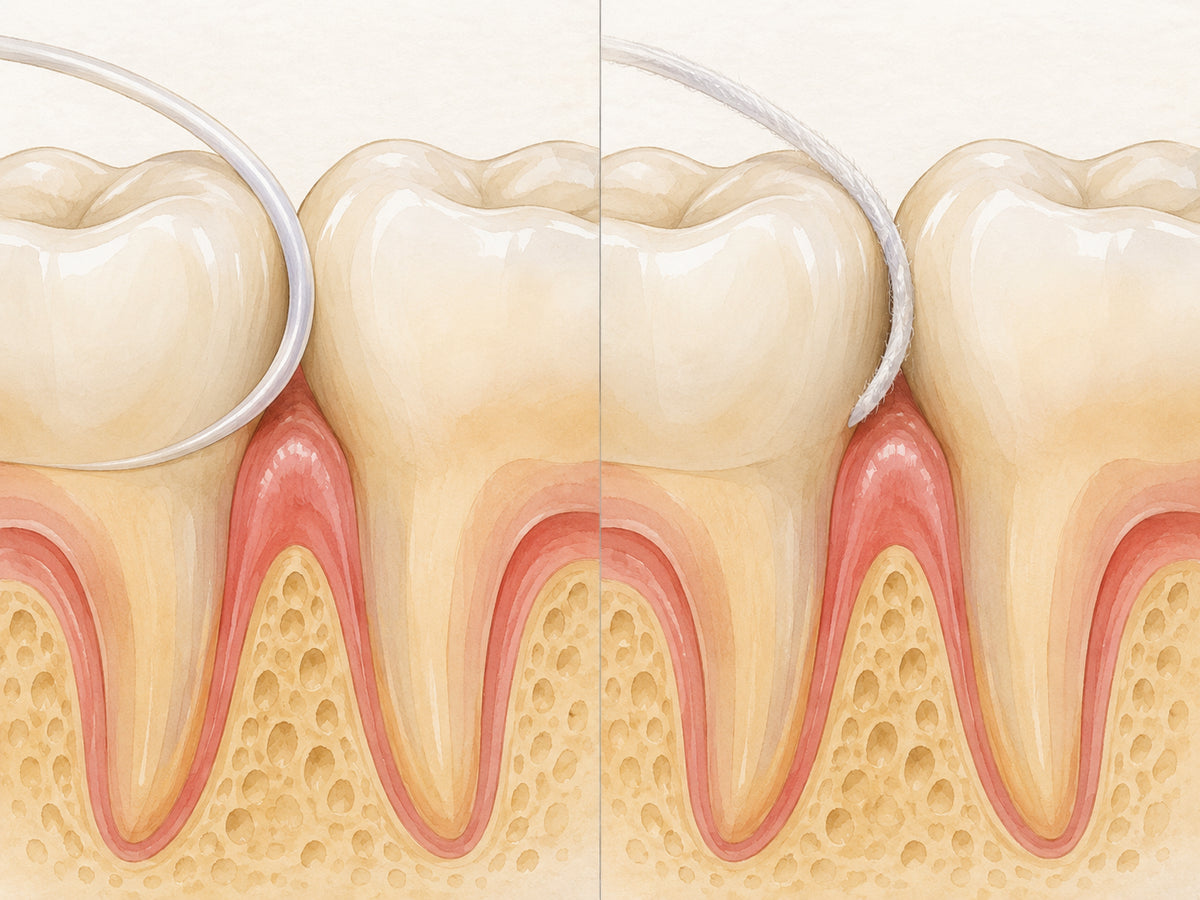
Dental floss is a thin strand, usually round or only slightly flat. Dental tape is flatter and wider, like a smooth ribbon. That difference changes how the product moves through the contact point—the spot where two teeth meet—and how it feels along the gum line.
Some floss has a wax coating to help it slide. Others are made from PTFE, a non-stick plastic material that can feel slick and resist shredding. Waxed and unwaxed floss clean similarly, but waxed floss is often easier to handle, according to clinical guidance on interdental cleaning.
The shape matters most in tight spaces. Thin floss can enter a narrow gap more easily. Tape’s broader ribbon covers more of the tooth surface but may not fit everywhere. The best everyday choice depends on access and personal preference.
Match Your Teeth and Gaps
Before choosing, think about how your teeth fit. You can often feel whether spaces are tight or open.
- Tight contacts: If a product only passes with a gentle snap or some resistance, regular floss tends to work best.
- Wider gaps: Dental tape can cover more surface. But if a tiny interdental brush—a small brush that fits between teeth—slides in easily, it may be more effective than floss or tape.
- Crooked or overlapping teeth: Some spots may be tight and others wide. You may need thin floss for one area and tape or a small brush for another.
- Crowns or fillings: These can change the shape or smoothness of the contact. If floss shreds consistently in one place, mention it to your dentist rather than forcing it.
- Tender gums: Tape or waxed floss may feel less harsh.
- Braces: Brackets and wires change access, so standard floss or tape may be frustrating. More on that below.
Traditional floss is a reasonable first choice for people with tight spaces and good hand control, according to a practical guide for choosing interdental tools. When the gap is wide enough for a small brush, the brush often cleans better and reduces gum inflammation more than floss.
When Floss Has the Edge
Regular floss is most useful when the space between teeth is narrow. A thin strand can slide into a tight contact and scoop out trapped food. Floss can still help in spaces that are too small for an interdental brush or other device, according to clinical guidance.
The main limitation is that thin floss can shred or snap. This is more likely if you force it past a rough edge on a filling or crown, or if you saw back and forth hard. Shredding in the same spot is a clue to ask your dentist to check the restoration.
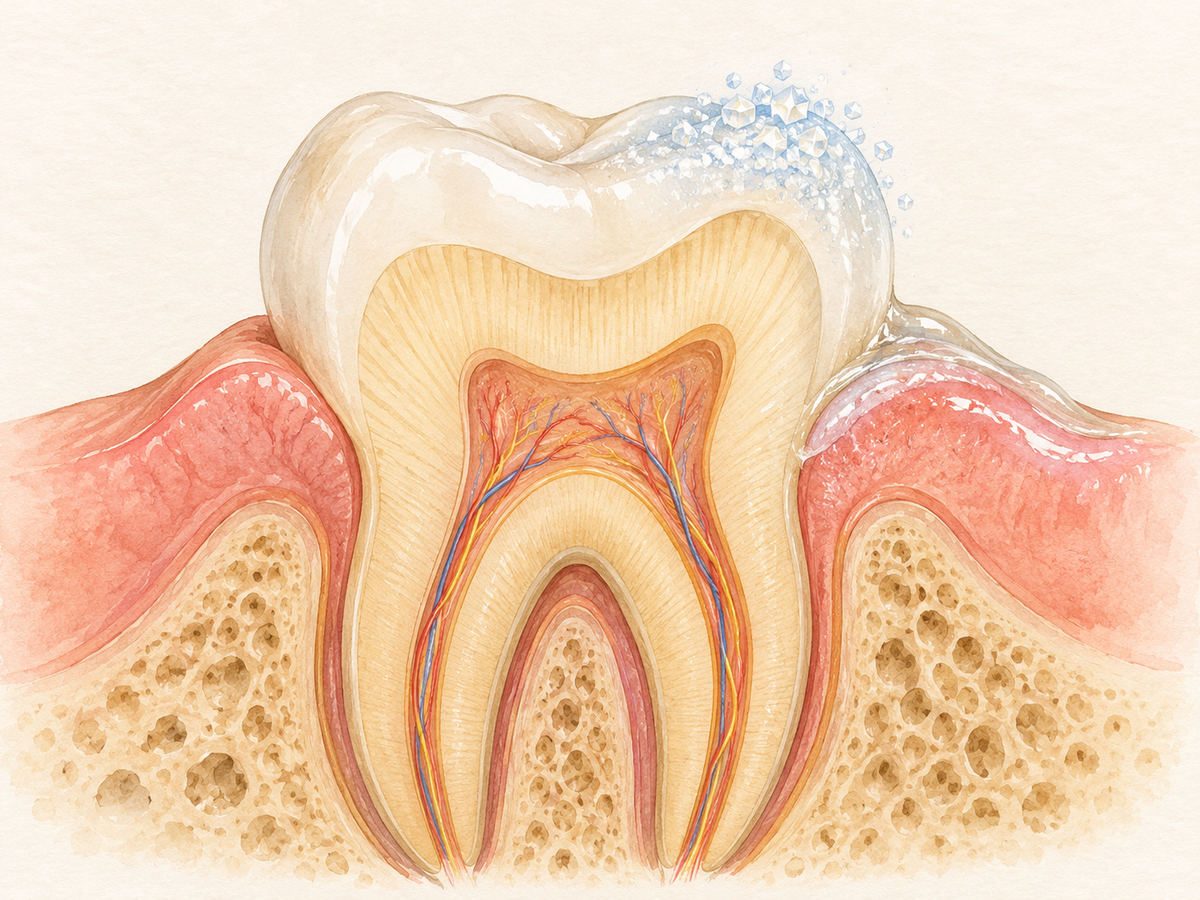
Flossing is also technique-sensitive. It takes practice to reach the right places without hurting the gum line. When done carefully, floss can remove plaque slightly below the gum line, but careless use can irritate the gum tissue, according to clinical guidance.
When Tape Has the Edge
Dental tape may be the better choice if your gaps are wider or your gums feel tender. The flat ribbon spreads pressure over a broader area, so it may feel less like a cutting string. It also covers more tooth surface as you glide it up and down.
In one small study comparing floss products, dental tape removed plaque at least as well as waxed floss, and half of the participants preferred tape over regular floss. The same study found no significant difference in effectiveness between dental tape and waxed floss. Clinical guidance also notes tape may be slightly more effective in some comparisons, but the difference is modest.
Dental tape can be too wide for very tight contacts. If you have to force it, stop. Forcing a wide ribbon into a narrow space can hurt the gum and cause shredding. Switch to thin floss in those spots.
Special Situations That Change the Choice
Some mouths do not fit neatly into the floss-or-tape question. In these cases, another tool may work better. A water flosser uses a stream of water to clean between teeth and around hardware.
- Braces: Wire and brackets block the usual path. Floss threaders—stiff loops that pull floss under hardware—or superfloss—floss with a stiff end and spongy section—can help you get under the wire. A water flosser may also be easier, especially with braces or limited hand control, according to guidance on water flossing.
- Bridges: A bridge replaces missing teeth and has a section you cannot reach by pulling floss straight down. A floss threader or superfloss can guide floss under the false tooth.
- Implants: An implant is an artificial tooth root with a crown on top. If a small brush fits around it, that may clean best. Floss may work if you have good dexterity, but it needs a gentle touch, according to a study on implant cleaning.
- Gum recession: When the gum pulls back, root surfaces may feel sensitive. A soft tape, small brush, or water flosser may feel better than thin floss.
- Limited dexterity: Floss holders, interdental brushes, and water flossers are often easier to grip than a long strand of floss or tape. A practical guide for choosing interdental tools lists floss holders, soft picks, and water flossers as alternatives when handling regular floss is hard.
If a small interdental brush fits comfortably, some dental guidelines favor it because it removes plaque well. A clinical guideline on gum disease care recommends teaching interdental brushes first when gum inflammation is present.
Test Before You Commit
A one-week test works well because it lets you compare the products in your own mouth.
- Pick two products: regular floss and dental tape.
- Use floss on one side of your mouth and tape on the other. Or alternate days.
- Each time, notice:
- Does the product shred or snap?
- Does it feel comfortable along the gum line?
- Do your gums bleed?
- Can you reach the back teeth?
- At the end of the week, choose the one that was easier, more comfortable, and that you actually used.
Comfort matters because people are more likely to keep using a tool that does not hurt or frustrate them, according to a review of interdental device evidence. The best floss or tape is not the one that sounds better—it is the one that fits your mouth and routine.
Common Mistakes to Avoid
The product is only part of the story. How you use it matters just as much.
- Do not snap floss or tape into the gum line. That can cut or bruise the gum.
- Do not saw aggressively back and forth. This can irritate the gum and may shred the product.
- Do not force tape into a very tight contact. If it will not pass with gentle pressure, use floss or another tool.
- Do not assume a product switch alone will fix bleeding. Bleeding often means the gums are inflamed, a condition called gingivitis. Good technique and regular cleaning matter more than the shape of the string.
A randomized trial on flossing technique found that instructions and technique influenced gum bleeding outcomes. Careless flossing can also reduce effectiveness and harm the gum line, according to clinical guidance.
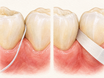
For a simple technique rule: ease the product gently past the contact point, curve it against the side of each tooth, and move it up and down a few times.
Quick Decision Guide
Use this chart as a starting point. If you are still unsure or have ongoing pain or bleeding, ask a dental hygienist.
| If you have… | Try… | Why |
|---|---|---|
| Tight gaps between teeth | Thin or waxed floss | Easier to slide through narrow contacts |
| Wider gaps | Dental tape or small interdental brush | Covers more surface; a brush may clean better if it fits |
| Tender gums or floss feels harsh | Dental tape or waxed floss | Broader, smoother surface may feel gentler |
| Floss that shreds at a crown or filling | Waxed tape or floss, then have the restoration checked | Rough edges can catch string floss |
| Braces, bridges, or implants | Floss threader, superfloss, interdental brush, or water flosser | Standard floss or tape may not reach properly |
| Difficulty handling long floss | Floss holder, interdental brush, or water flosser | Easier to grip and control |
The goal is simple: clean between your teeth every day without hurting yourself. If floss or tape causes ongoing pain or bleeding, stop guessing and ask a dentist or dental hygienist for hands-on help.
 Best Overall
 Best Value
 Best for Sensitive Teeth
This article has been reviewed by an oral health professional for accuracy. It is intended to provide general educational information and should not be used as a substitute for personalized medical advice, diagnosis, or treatment. If you have questions or concerns about your oral health, please consult a dentist, physician, or other qualified healthcare provider.